
What does the pattern of lost hot water tell you?
All-cold water throughout the house differs from hot water that runs out halfway through a shower. If one fixture is affected while others work normally, a fixture cartridge or mixing problem may be involved. If the whole home is affected, the heater and its supply become more relevant.
Many storage heaters use more than one heating element, but designs and controls vary. Partial heating can have several causes. Do not assume the lower element has failed solely because the water runs out early; the technician should confirm the diagnosis.
Which observations are safe for a homeowner?
Record when the problem started, whether a power interruption occurred, and whether the tank had time to recover before the complaint. Read an externally visible display if present. Photograph the model label only when you can reach it safely without moving covers or stepping into water.
You can note a visibly tripped breaker from a dry, safe position. Do not repeatedly reset it, remove electrical panels, or touch wiring. A recurring trip may indicate a fault rather than a nuisance. If there is water near electrical equipment, keep away and obtain appropriate urgent help.
What will a technician check?
After establishing a safe working condition, a qualified professional may check supply power, controls, thermostats, heating elements, connections, and protective devices. Appropriate testing depends on the model. Electrical isolation and verification are part of the job; they are not optional steps to skip for speed.
Assessment also needs to consider the water side. A mixing valve, temperature setting, demand pattern, or plumbing issue can affect the hot water at a tap. Ask the provider to explain what was tested and why the proposed repair fits the findings.
What if the heater has power but the water stays cold?
A display or indicator light does not establish that the heater can deliver its full heating output. A failed component, control issue, or other fault may still prevent recovery. The no-hot-water guide helps you organize the symptom history before contacting a provider.
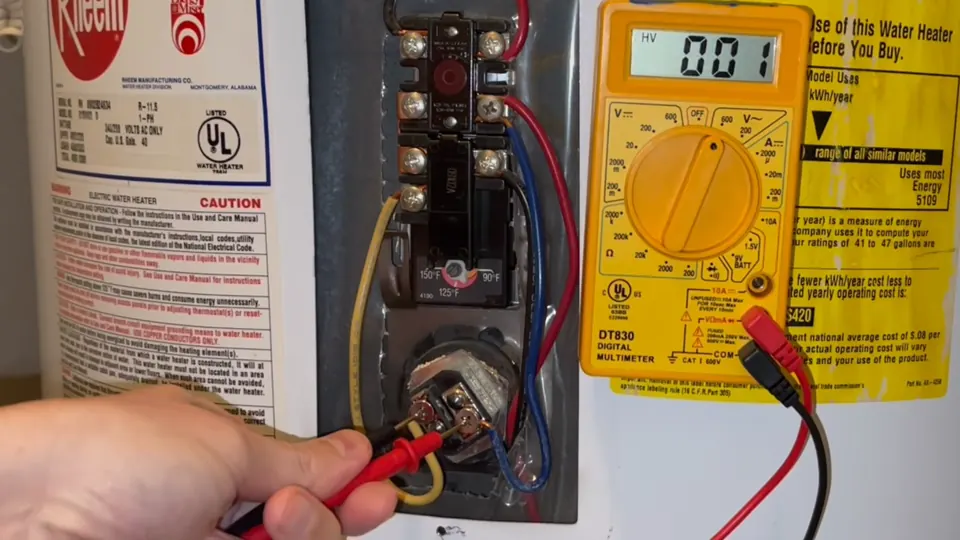
Do not remove access panels or use a multimeter on the heater based on general online instructions. A professional uses appropriate test equipment and model documentation. Water, metal appliance surfaces, and electrical supply make incorrect testing particularly hazardous.
Should you repair the unit or consider another heater?
An isolated replaceable component and a sound tank can support a repair discussion. A tank-body leak, repeated breakdowns, or a mismatch between capacity and household use may change that discussion. Use condition and diagnosis rather than age alone to decide what questions to ask.
If you are considering replacement, ask about hot-water demand, available electrical capacity, physical clearance, and installation requirements. A heat-pump water heater has different operating and space considerations from a conventional resistance unit. See the installation and replacement guide.
What information helps the provider prepare?
- The heater type and model, if safely available.
- Whether hot water disappears everywhere or at one fixture.
- Any observed breaker trip or display message.
- How long hot water lasts and which uses happen together.
- Any visible moisture and its location.
Use the Decatur water heater symptom selector for a starting point. Provider availability must be confirmed through the current contact route once it is active.
Frequently asked questions
Can one failed element reduce hot-water supply?
It can on some designs, but similar symptoms have other causes. A professional should test the heater before replacing components.
Should I reset a tripping breaker repeatedly?
No. A recurring trip needs assessment. Do not keep resetting it or bypass protection.
Does a new thermostat setting fix no hot water?
Not necessarily. Raising the setting can introduce a scald risk without resolving a supply or component fault.
Is a heat-pump water heater the same as a standard electric tank?
No. Both may use electricity, but their operating modes, components, and maintenance needs differ. Identify the exact type.
Can a shower valve cause a cold shower?
Yes. If other hot taps work normally, the fixture or mixing arrangement may be involved rather than the heater alone.
Is electric testing a safe DIY first step?
Not on the basis of this guide. Keep observations external and ask a qualified professional to handle electrical testing.
Sources and model-specific guidance
These sources support the general guidance. Your appliance manual and a qualified assessment determine the appropriate action.